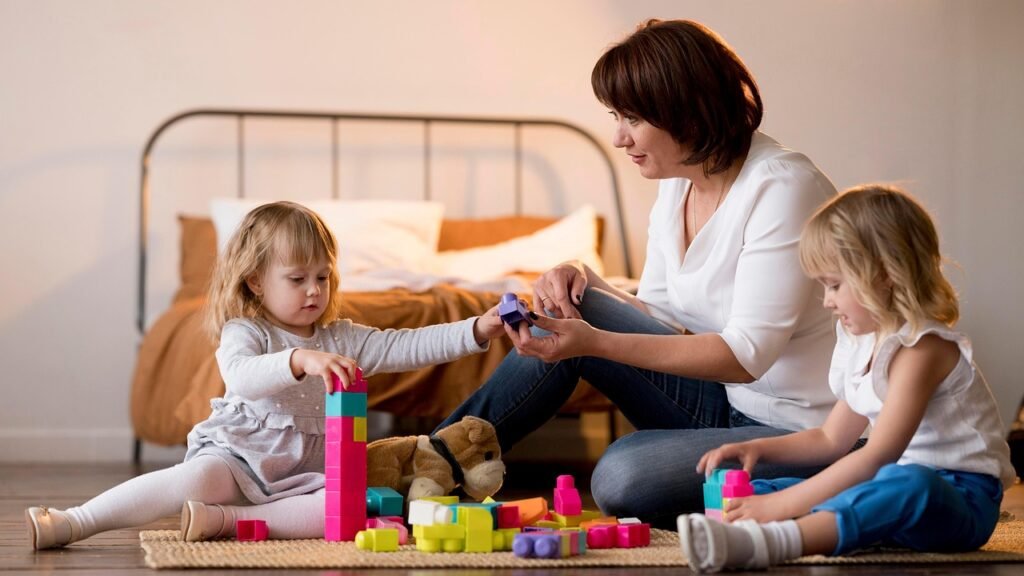
In today’s world, it’s all too easy to hand children a tablet or phone to keep them busy. While technology has its place, relying too heavily on screen time can limit opportunities for speech development, vocabulary growth, and critical thinking. The good news? Simple toys, games, and everyday play can make a big difference in helping your child learn to communicate with confidence.
At Vero Speech Therapy, I encourage parents to turn playtime into learning time—because every interaction is an opportunity to grow language skills.
Why Play Matters for Speech Development
Play isn’t just fun—it’s the foundation of learning. Through play, children practice:
- Speech Sounds – Repeating and experimenting with words and phrases
- Vocabulary – Learning the names of objects, actions, and concepts
- Social Interaction – Taking turns, asking questions, and expressing feelings
- Critical Thinking – Problem-solving, decision-making, and imagination
By actively engaging with your child during play, you’re giving them the tools to build stronger language skills—something no app or video can fully replace.
Toys and Games That Build Communication Skills
1. Building Blocks & Puzzles
Encourage your child to describe what they’re building or ask them questions like, “Where does this piece go?” This promotes spatial vocabulary and problem-solving.
2. Pretend Play Sets (Kitchen, Doctor, Store)
Role-playing games are perfect for practicing conversation, storytelling, and new vocabulary.
3. Board Games & Card Games
Games like “Go Fish,” “Guess Who,” or memory matching require listening, asking, and answering—skills that translate directly into better communication.
4. Books & Storytelling Toys
Reading together and encouraging your child to “tell the story back” builds vocabulary, comprehension, and sequencing skills.
5. Musical Toys & Rhymes
Singing songs and rhymes helps children learn rhythm, repetition, and sound patterns in speech.
The Downside of Too Much Screen Time
While some educational apps can support learning, too much passive screen time can:
- Limit face-to-face conversation
- Reduce opportunities for problem-solving and imagination
- Delay vocabulary growth compared to children engaged in interactive play
Children learn best through human connection, movement, and imagination, not just swiping a screen.
Why Early Critical Thinking Matters
Encouraging your child to ask questions, solve problems, and make choices during play builds critical thinking skills that benefit them for life. A child who learns to think creatively and communicate clearly will carry those skills into school, friendships, and beyond.
Support Your Child’s Communication Journey
The best part? You don’t need expensive tools—just time, simple toys, and your willingness to engage. Every puzzle piece, story, or role-play moment is a chance to grow your child’s confidence and communication.
At Vero Speech Therapy, I work with families to create fun, practical strategies that strengthen speech at home while keeping kids engaged and happy.
👉 Contact Us Today to learn more about personalized speech therapy and parent coaching with Pamela Cerrato.
Because play isn’t just fun—it’s how children learn to find their voice.