Pragmatic language is the set of skills a child uses to communicate socially: starting and ending conversations, taking turns, staying on topic, reading tone and body language, and adjusting how they speak depending on who they are talking to. A child can have crystal-clear speech sounds and an impressive vocabulary and still find these skills genuinely hard.
This is one of the most commonly missed areas in child development, because the surface indicators all look fine. The child talks. The child talks a lot, sometimes. But conversations do not go anywhere, playdates end early, and the teacher mentions that the child plays near other children rather than with them.
What does a pragmatic language difficulty look like?
After 27 years of pediatric speech therapy, the parents who bring me these concerns usually describe something they cannot quite name. The child is bright and verbal, and something about interaction is effortful. Common patterns include:
- Talking at length about a favorite subject without noticing the listener has disengaged
- Difficulty starting a conversation, or starting it in the middle of a thought the other person cannot follow
- Trouble taking turns, either interrupting frequently or waiting so long the moment passes
- Missing the point of a joke, or taking figurative language literally
- Not adjusting tone or volume for the setting, sounding the same with a teacher as with a sibling
- Standing too close, or avoiding eye contact in a way that reads as disinterest
- Struggling to repair a conversation that has gone wrong, so a small misunderstanding becomes a conflict
- Difficulty telling a story in order, so listeners cannot follow what happened
None of these on their own means a child has a disorder. Many are typical at certain ages, and children develop social skills on different timelines. The signal is a persistent pattern that is affecting friendships, classroom participation, or the child’s own comfort.
How common are social communication difficulties?
More common than most parents expect. A peer-reviewed study published in the Journal of Child Psychology and Psychiatry estimated the prevalence of social (pragmatic) communication disorder in the range of 7 to 11 percent depending on the diagnostic criteria applied (Saul and colleagues, 2023). That same research found these difficulties were associated with academic and behavioral outcomes, which is a clinical way of saying the classroom notices.
For broader context, the National Institute on Deafness and Other Communication Disorders estimates that between 6 and 8 million people in the United States have some form of language impairment (NIDCD). Pragmatic difficulties are one part of that picture and are frequently the part that does not get referred, because the child’s speech sounds are age appropriate.
Is this the same as autism?
Not necessarily, and this is the question I am asked most often. Social communication differences are a core feature of autism, and they also occur in children who are not autistic, including children with developmental language disorder, ADHD, and hearing loss, and in children with no other diagnosis at all.
A speech-language evaluation is not a diagnosis of autism, and it is not a substitute for one. What it does is describe precisely which communication skills are developing typically and which are not, which is useful information regardless of what else is going on. When an evaluation raises broader developmental questions, the right next step is a conversation with your pediatrician about a comprehensive assessment.
What does therapy for social communication involve?
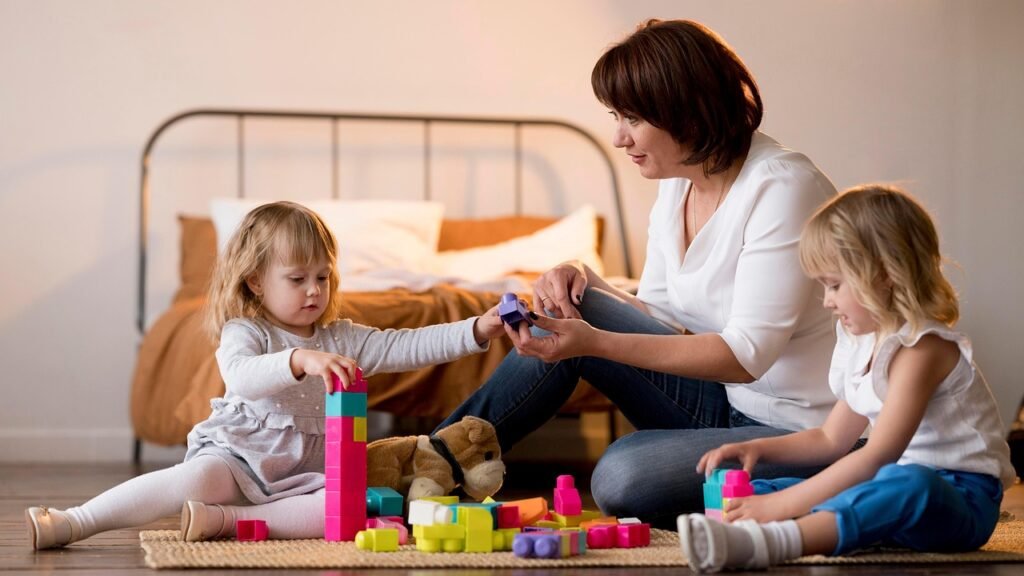
It looks different from articulation therapy, because you cannot practice conversation alone at a table with flashcards. The work is interactive and often play-based for younger children, using structured practice with real conversational partners and then transferring those skills into settings where the child actually needs them.
In practice that means teaching specific, nameable strategies: how to enter a group that is already playing, how to notice when someone wants a turn, how to ask a follow-up question, how to tell when a topic is finished. Children respond well to having these made explicit, because for many of them the rules were never obvious in the first place. Parent coaching is part of it too, since the most valuable practice happens at the dinner table and on the playground rather than in a therapy room. Families who want to understand the practice behind this guidance and how individualized sessions are structured can start there.
When should a parent seek an evaluation?
The back-to-school weeks are when these concerns tend to surface, because a new classroom makes social demands that summer did not. Consider an evaluation if:
- Your child’s teacher has mentioned difficulty with peers, group work, or following classroom social routines
- Your child wants friends but consistently cannot sustain them
- Conversations at home feel one-sided in either direction
- Your child becomes distressed or withdrawn in social settings that other children navigate easily
- You have had a nagging feeling for a while and keep being told to wait
That last one deserves emphasis. Waiting is reasonable advice for some developmental questions and less reasonable here, because social skills compound. A child who struggles to enter play gets fewer opportunities to practice entering play, and the gap tends to widen rather than close on its own.
Frequently asked questions
What is pragmatic language? Pragmatic language is the social use of communication: how a child starts and maintains conversations, takes turns, stays on topic, interprets tone and body language, and adjusts their style for different listeners. It is separate from how clearly a child pronounces words or how large their vocabulary is.
Can a child have good speech and still need speech therapy? Yes. Clear articulation and a strong vocabulary do not guarantee that a child can use language socially. Pragmatic difficulties are frequently overlooked precisely because the child sounds like a capable communicator.
Does a social communication difficulty mean my child is autistic? No. Social communication differences are a core feature of autism, but they also occur in children with developmental language disorder, ADHD, hearing loss, or no other diagnosis. A speech-language evaluation describes the communication profile rather than providing a diagnosis of autism.
At what age should I be concerned? There is no single age, because social skills develop gradually. The more useful signal is a persistent pattern that is interfering with friendships, classroom participation, or your child’s comfort in social settings.
What happens in an evaluation for social communication? An evaluation typically combines parent and teacher input, structured assessment, and observation of the child in conversation and play. The goal is to identify which specific social communication skills are developing typically and which need support.
Can social communication skills actually be taught? Yes. Many children respond well when the unwritten rules of conversation are made explicit and then practiced with real partners in real settings. Progress depends on consistent practice at home and school, not just in sessions.
Talk with a pediatric speech-language pathologist
If your child speaks clearly but struggles to connect, that is worth a conversation rather than another year of waiting. To discuss your concerns or schedule an evaluation, contact Vero Speech Therapy.
About the author
Pamela Cerrato, MA, CCC-SLP, is a pediatric speech-language pathologist with more than 27 years of experience helping children find their voice and grow into confident communicators. She holds the Certificate of Clinical Competence in Speech-Language Pathology (CCC-SLP) from the American Speech-Language-Hearing Association and provides individualized pediatric speech therapy to families in Vero Beach, Florida.